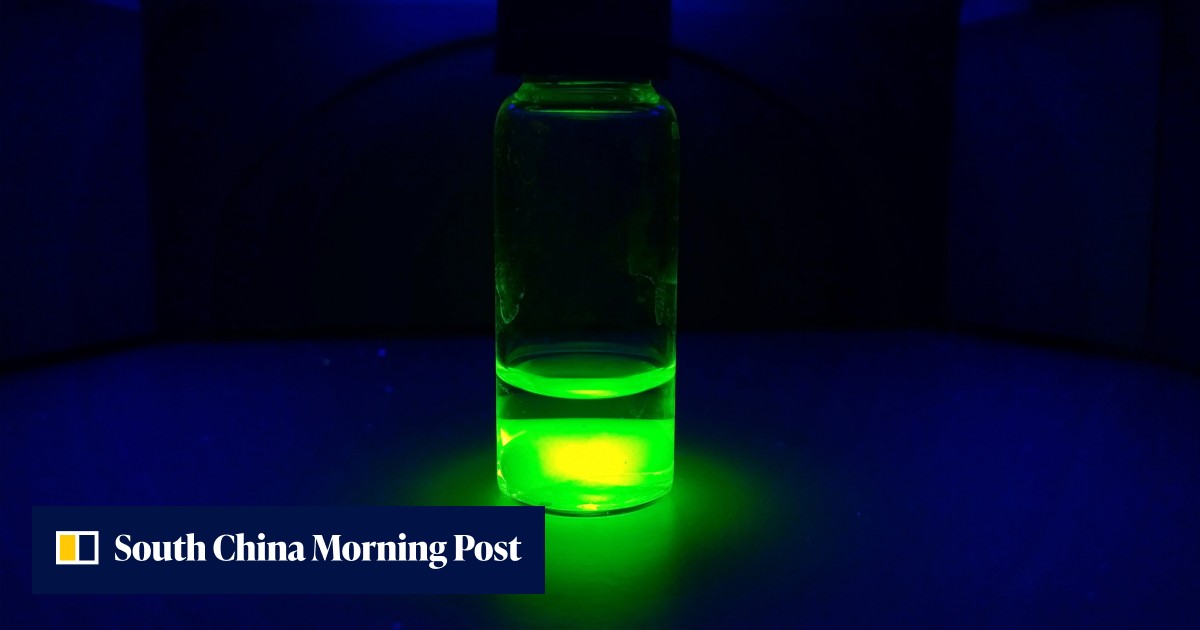
In a major scientific breakthrough published in Nature, researchers from China’s leading institutions have overcome one of the biggest roadblocks in modern optoelectronics: unlocking the lifespan and commercial viability of next-generation perovskite light-emitting diodes (PeLEDs).
The joint research team—comprising scientists from Fudan University, Nanjing Tech University, and the University of Science and Technology of China (USTC)—has pioneered a novel stabilization method for metal halide perovskite crystal thin films. While perovskite materials have long promised unprecedented color purity, ultra-high brightness, and exceptional power efficiency, commercial adoption was previously hindered by rapid degradation caused by ion migration under electrical bias.
Solving the Ion Migration Challenge
By engineering a nanoscale chemical passivation barrier across crystal boundaries, the researchers successfully stabilized the internal lattice structure against ion drift. The newly developed PeLEDs demonstrated an operational lifespan exceeding industry benchmark thresholds by several orders of magnitude while maintaining an extraordinary external quantum efficiency (EQE).
Key Technology Highlights:
- Material Innovation: Metal halide perovskite crystal thin films with passivated grain boundaries.
- Commercial Impact: Paves the way for ultra-flexible, ultra-wide color gamut LED displays and video walls.
- Energy Efficiency: Substantial reduction in operating power draw compared to traditional organic and legacy inorganic emitters.
- Cross-Industry Application: Synergies with high-efficiency tandem perovskite solar cells and architectural lighting.
What This Means for the Commercial Display Industry
For display manufacturers and visual solution integrators like GLEESYS, breakthroughs in perovskite LED materials represent the horizon of ultra-high-definition visual experiences. The ability to produce flexible, resilient displays with richer color gamuts and higher energy conservation will soon transform indoor display environments, digital signage, and architectural media installations.
Source Reference & Original Reporting:
South China Morning Post: Light fantastic — China unlocks lifespan potential of next-gen LED →